.png)
BangladeshNationalist Party-BNP

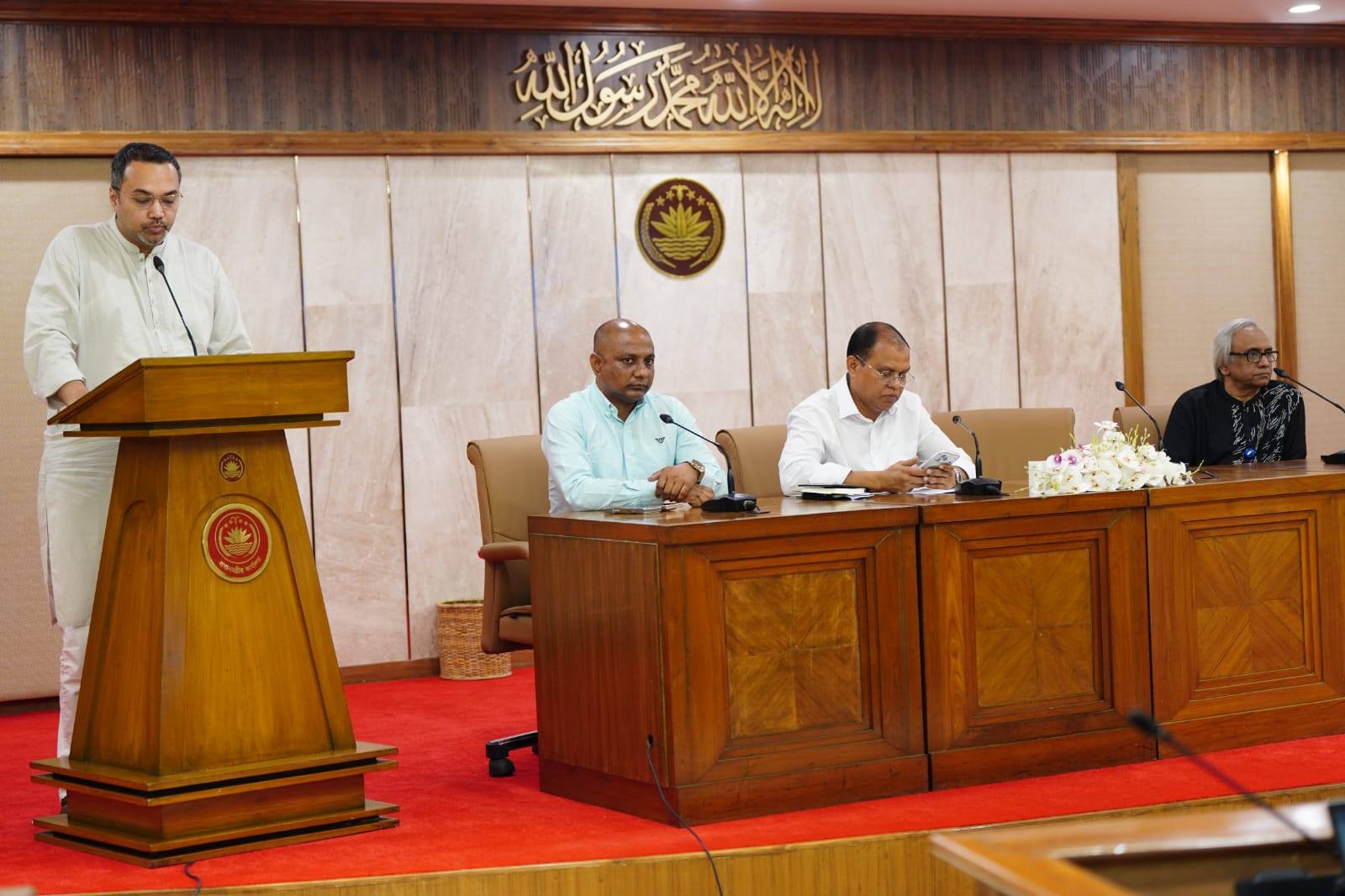
Press Conference at the Prime Minister’s Office on the Occasion of the Government’s “100 Days in Office”
Prime Minister’s Swift, Visible, and Effective Multifaceted Initiatives in Implementing Election Commitments Within the First 100 Days
Bismillahir Rahmanir Rahim
Assalamu Alaikum.
Dear Journalist brothers and sisters,
I extend my sincere thanks and gratitude to all of you for attending this press conference organized on the occasion of the completion of 100 days of the Government of the People’s Republic of Bangladesh elected by the people’s mandate. At the outset, I would like to extend advance greetings on the occasion of Holy Eid-ul-Azha.
I would also like to thank Honourable Prime Minister’s Press Secretary Mr. Saleh Shibly for arranging today’s press conference, although he could not be present among us due to a personal visit to London. I also express my gratitude to Honourable Prime Minister’s Additional Press Secretary Mr. Atikur Rahman Ruman, Prime Minister’s Speech Writer Mr. S.A.M. Mahfuzur Rahman, Deputy Press Secretary-1 Mr. Jahidul Islam Rony, and all members of the press team.
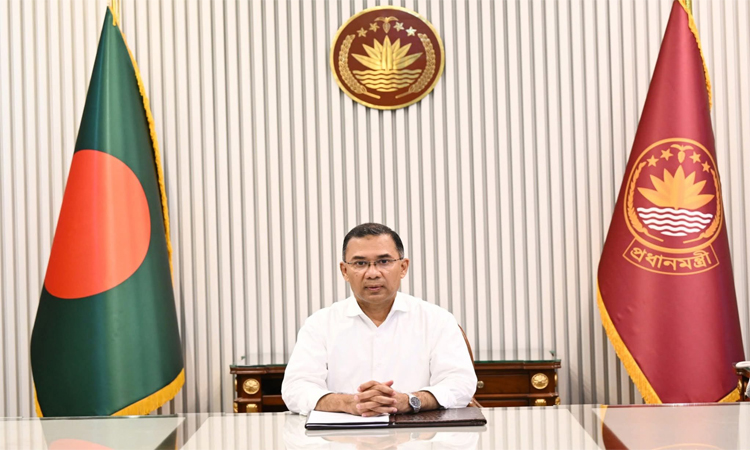
As you are aware, the 13th National Parliamentary Election was held on 12 February 2026. In that election, the Bangladesh Nationalist Party (BNP) secured an overwhelming majority. On 17 February, BNP Chairman Mr. Tarique Rahman took oath as Prime Minister and formed the government under his leadership. Therefore, we have now approached the government’s first 100 days in office.
Under the direction of the Honourable Prime Minister, we aspire to serve as a responsible government — a government that works for the country and remains accountable to its people. Therefore, with a firm commitment to nation-building, even before the ink of the ballots had faded, and from the very first day of assuming responsibility for governing the state, the Honourable Prime Minister took swift, visible, and effective measures to implement every priority election commitment.
He instructed every ministry to formulate issue-based and sector-specific 180-day action plans. As a result, the entire state machinery has aligned itself with clear goals and continues to work tirelessly to fulfill electoral commitments. Through this unprecedented scale of government initiatives, positive changes in the quality of life of ordinary citizens have already begun to emerge.
Government initiatives in social protection, agriculture, education, healthcare, employment, economy, technology, and infrastructure have already created renewed hope among the people. Within the very first month of assuming office, the government strengthened women-centered social protection programs by introducing the “Family Card” initiative. In accordance with election commitments, programs have been launched to provide honorariums to Imams, Muazzins, Khatibs, and other religious leaders. Furthermore, to reduce public hardship, additional monthly charges on prepaid electricity meters have been withdrawn, providing financial relief to ordinary citizens.
The government has undertaken several important initiatives to further strengthen agriculture and the rural economy. Agricultural loans of up to BDT 10,000 for small farmers, including accrued interest, have been waived — a decision taken during the government’s very first cabinet meeting. Through the introduction of the “Farmer Card,” agricultural management has been brought under a digital framework.
At the same time, the nationwide canal excavation program has created opportunities for long-term positive transformation in agriculture, irrigation, and water management. The revival of the historic canal excavation program introduced by Shaheed President Tarique Rahman will not only contribute to preserving nature, biodiversity, fisheries, agriculture, and livestock resources, but will also accelerate economic prosperity and business development through water reservoir creation and restoration of natural water flow.
As a result, new momentum will be generated in the rural economy, creating extensive employment opportunities. Additionally, initiatives have been undertaken to implement the Padma Barrage Project to unlock agricultural, water management, and environmental development potential across the southwestern region of the country.
At a historic moment in the country’s journey, through a free, fair, and credible election and with an unforgettable mandate from the people, the Bangladesh Nationalist Party assumed the sacred responsibility of governing the state. Following a prolonged period of misrule, a blood-stained July mass uprising, and a sixteen-year democratic struggle marked by sacrifice and perseverance, the country, under the visionary and people-oriented leadership of Honourable Prime Minister Mr. Tarique Rahman, has overcome profound challenges and ensured the empowerment of citizens.
Within just the first 100 days, the government elected by the people’s vote has returned state ownership and authority to the people and continues strengthening the institutional foundations of democracy.
We have witnessed how freedom of speech was suppressed during the fascist regime and how the media was controlled through coercive measures. In contrast, every BNP government led by Shaheed President Ziaur Rahman and former Prime Minister Begum Khaleda Zia ensured freedom of expression and the independent development of the media in the country. Following that tradition, the current government is also working to ensure the highest level of freedom for the media and journalists.
However, we have already observed that taking advantage of this unprecedented freedom, a certain group is deliberately attempting to create disorder and is engaging in various forms of disinformation campaigns. Misleading propaganda, inappropriate conduct, and indecent activities targeting the Honourable Prime Minister, the Honourable Home Minister, and other important state figures are being used to create social instability, which is harmful to the democratic environment and state discipline.
On one hand, the government continues to work sincerely to establish human rights, freedom of expression, and the rule of law — a commitment repeatedly demonstrated through the new standards of tolerance and openness established during the past 100 days. On the other hand, the misuse of freedom of speech for spreading misinformation, hatred, and hostility has become a political tactic for a particular group, which stands in contradiction to the aspirations of the mass uprising.
Having overcome a prolonged period marked by enforced disappearances, killings, politically motivated cases, attacks, and repression, the cabinet of the government elected by the people’s mandate has held a total of 10 cabinet meetings between 17 February and 24 May.
A total of 60 important decisions have been unanimously adopted in these meetings. Of these, 37 decisions — approximately 62 percent — have already been implemented, while the remaining 23 are currently under implementation.
The government’s ability to execute a significant portion of cabinet decisions within such a short period after assuming office stands as a clear example of its efficiency, effectiveness, and sincere commitment to delivering results.
Dear journalist brothers and sisters,
As a labour-friendly political party, the Bangladesh Nationalist Party (BNP) has always stood in favor of ensuring workers’ rights, dignity, and fair entitlements. Continuing that commitment, the current government has taken effective initiatives to ensure the payment of workers’ salaries, allowances, and Eid bonuses before Eid across the country.
To achieve this objective, continuous discussions and coordination have been carried out with banks, relevant stakeholders, factory owners and workers, and various owners’ associations. Necessary policy support and cash disbursement arrangements have also been ensured. As a result of these ongoing initiatives, the uncertainty and instability that previously emerged due to labour unrest or movements have been successfully avoided. Consequently, industrial workers are now able to celebrate Eid in a peaceful, joyful, and festive environment, Alhamdulillah.
Ahead of Holy Eid-ul-Azha, the government has introduced special train services and special water transport services to ensure smooth travel for homebound citizens. Under the directive of the Honourable Prime Minister, separate train compartments have also been arranged to ensure safe and comfortable travel for women.
Additionally, a special monitoring cell has been established seven days before Eid to oversee the overall transportation system. Strict measures have been undertaken to prevent cattle smuggling surrounding Eid-ul-Azha, while effective initiatives have been implemented to support the development and marketing of domestically produced livestock.
Instructions have been issued to ensure the removal of sacrificial animal waste within eight hours, ensure fair leather prices, and provide all necessary government support for proper leather preservation.
At the same time, through special government initiatives, airfare for general Hajj pilgrims has been significantly reduced this year, bringing substantial relief to ordinary citizens.
To create new momentum in trade and transportation systems, preparations have begun for implementing the Economic Corridor from Teknaf to Tetulia. The construction work of the Third Terminal of Hazrat Shahjalal International Airport is progressing rapidly with the target of inauguration by 16 December.
Bank guarantee facilities for overseas higher education have been expanded, while technology-driven services have been strengthened through the introduction of high-speed free Wi-Fi at airports and railway services.
To promote youth sports talent development, Sports and Notun Kuri initiatives have been relaunched.
The government has also undertaken swift and humane measures in the healthcare sector. Measles vaccines have been procured, bringing nearly all children under vaccination coverage, and maternity leave provisions have been enhanced.
At the same time, initiatives have been undertaken to gradually ensure healthcare allocations equivalent to 5 percent of GDP.
Dear journalist brothers and sisters,
We have witnessed a horrific and brutal crime committed against child Ramisa. Following the incident, the Honourable Prime Minister, the Honourable Home Minister, the Honourable Law Minister, and other key government officials visited her residence, expressed sympathy to the family, and pledged to ensure the highest punishment for the offender through swift arrest and legal proceedings. The charge sheet has already been submitted.
At the same time, the government has assured comprehensive support to the affected family, demonstrating an important example of humane and responsible governance.
Another significant example of establishing the rule of law in the country is the court verdict sentencing an accused to death for the rape of a nine-year-old child in Meherpur. The judgment, delivered within only 29 working days, is being considered a rare milestone in ensuring speedy justice within the country’s judicial system.
Furthermore, meaningful progress is being observed in breaking the long-standing culture of impunity and strengthening the rule of law. After a decade, the arrest and remand of the first accused in the Tanu murder case has created a renewed pathway toward uncovering the truth. Likewise, the accused in the Sharif Osman Hadi murder case has been swiftly identified in India, and efforts to bring him back to the country are currently underway.
There was once a time when victims of injustice, persecuted families, and helpless citizens would wait for days and months in front of Ganabhaban hoping for a single opportunity to meet the Honourable Prime Minister, to share their unbearable suffering, and to seek justice. Standing outside the doors of power was often their last hope.
During the first 100 days of the BNP government elected by the people’s vote, a different reality has emerged.
Today, victims are no longer required to go to the Prime Minister; rather, the Prime Minister himself is reaching the doorsteps of the people. He is listening to citizens, standing beside them in times of pain and hardship, and extending support through compassion and courage.
This transformation is not merely administrative; it represents a unique example of humane and people-oriented governance.
The highest office of the state is no longer detached from the concerns of ordinary citizens. Instead, the nation’s leadership is standing directly beside the people and demonstrating a model of compassionate and responsive governance.
Dear journalist brothers and sisters,
Significant changes are being introduced to the Bangladeshi passport. The phrase “Except Israel,” which had been removed during the tenure of the previous fascist government, is being reinstated. In recognition of national interests, Islamic values, and public sentiment, the BNP government has undertaken this initiative to restore the phrase.
At the same time, an ambitious target has been set to transform Bangladesh into a trillion-dollar economy by 2034, which is expected to become a major milestone in the country’s development journey. Initiatives are also being undertaken to establish discipline and accountability through reforms in the economic sector, banking system, and the overall state structure.
To restore the legitimate rights of the people and send a strong message against corruption, assets worth BDT 4,264 crore belonging to the widely discussed S Alam Group have been successfully seized. Furthermore, the government has successfully repaid USD 90.66 million in foreign debt, demonstrating the strength and resilience of Bangladesh’s economy in the international arena.
To recover funds illegally transferred abroad, historic agreements have already been signed with three out of ten countries, while negotiations with the remaining countries are at the final stage. As a result, international confidence is expected to strengthen further, while foreign investment is anticipated to expand significantly.
We have witnessed the highest remittance inflow in the country’s history during the past month, reflecting the trust and confidence of expatriate Bangladeshis in this democratic government. Monthly remittance inflows have already reached nearly USD 3.75 billion.
At the same time, initiatives have been undertaken to introduce a “Probashi Card” to expand welfare and government services for expatriate Bangladeshis. Increased foreign currency reserves and positive export earnings growth have strengthened the country’s economic foundation.
In addition, initiatives have been taken to provide official identity cards to approximately two hundred thousand freelancers across the country, which will further institutionalize the digital economy.
The government is also continuing sincere efforts to reopen international labour markets that remained closed for an extended period.
To reactivate closed industries and create new momentum in the economy, a special fund of BDT 60,000 crore has been announced, which is expected to generate extensive employment opportunities.
At the same time, a groundbreaking initiative has been undertaken to introduce an “LPG Card” with special subsidies to reduce household cooking expenses for mothers and women across the country, which will play an important role in lowering the cost of living for ordinary citizens.
The Honourable Prime Minister has moved away from VIP culture and elevated public engagement to a new level. Today, people gather in large numbers along both sides of the roads, and even in the courtyards of their homes, simply to catch a glimpse of him. The spontaneous presence and emotions of school, college, and madrasa students, young children, and mothers and sisters clearly demonstrate that he has earned the love and trust of the people. This affection has now become a reflection of public aspirations.
Recently, we also witnessed that when the Honourable Prime Minister visited his alma mater, the University of Dhaka, students had the opportunity to engage directly with him in conversation. During the open question-and-answer session held there, students were given the opportunity to openly discuss their ideas, plans, and expectations for building the Bangladesh of tomorrow. It was a unique example of a positive, participatory, and democratic connection between leadership and the younger generation.
Not only in a particular district or at the University of Dhaka, but wherever he has gone, widespread enthusiasm, emotion, and affection have been evident among children, youth, senior citizens, mothers, and people from all walks of life.
Breaking conventional protocol boundaries, he has stopped vehicles on the road to fulfill children’s requests, listened to their stories, and warmly accepted their gifts of affection.
Likewise, he has interacted with farmers, labourers, and workers as an ordinary citizen. He has demonstrated himself not as a distant authority figure or an excessively protected individual, but as a representative of the people and a member of society.
Whether waiting at traffic signals, walking to the office, or participating in various activities among ordinary citizens after office hours, he has established an example of people-centered, humane, and participatory leadership.
Dear journalist brothers and sisters,
Since assuming responsibility for governing the state, Honourable Prime Minister Mr. Tarique Rahman has consistently demonstrated an unprecedented level of political tolerance, a unique mindset, and a model of humane politics.
Immediately after taking office, he unequivocally declared that those who voted for us and those who did not vote for us would all equally benefit from the support and opportunities provided by this discrimination-free government.
The recently concluded first session of the Great National Parliament marked a milestone in the country's parliamentary history. After more than a decade, the people of the country witnessed a truly functional, multidimensional, and diverse parliament.
During the vibrant 25-working-day session, the active participation of members from both the government and opposition parties was remarkable. Within a very short period, a record 94 bills were passed in parliament, and parliamentary standing committees were formed promptly. In terms of time and efficiency, this stands as an unforgettable achievement.
Not only that, the Honourable Prime Minister and ministers established a unique example of accountability by responding to hundreds of parliamentary questions.
During the Honourable Law Minister’s speech in parliament, the Honourable Prime Minister and Leader of the House demonstrated rare respect for parliamentary rules and discipline by remaining seated in the third row of the general seating arrangement without crossing the floor. This gesture deeply impressed members of both the government and opposition parties.
This parliament has demonstrated that democracy can be revitalized through mutual respect and cooperation while maintaining ideological diversity.
In the National Parliament galleries, arrangements have been made to allow 150 students from various educational institutions to regularly observe parliamentary proceedings directly.
The parliamentary visitor galleries have now been named after the country's seven Bir Sreshtha heroes, while the main entrance of the Parliament Building has been dedicated to General M.A.G. Osmani, the Commander-in-Chief of the Great Liberation War. This initiative will inspire generations with deep patriotism.
Additionally, initiatives have been undertaken to install solar panels on the rooftop of Parliament, through which a significant portion of its electricity demand will be met.
Politics is not merely about the arrogance of power, but about serving people — and in implementing this principle, special emphasis has been placed on nominating representatives from different religions, ethnic communities, minority groups, and indigenous communities to reserved seats for women in Parliament.
At the same time, women who have dedicated themselves to sacrifice, struggle, and public service over many years have been given due recognition and priority.
Considering the temporary hardships faced by people due to waterlogging in Chattogram, the Honourable Prime Minister personally apologized sincerely in Parliament — a gesture that reflects the qualities of a truly compassionate and responsible leader.
Through his simple lifestyle, humble conduct, and profound wisdom, an environment of trust between the people, the state apparatus, and the head of government has been restored after a long period.
Building upon this trust, the BNP government will complete the Padma Barrage project and will also move forward with the Teesta Barrage project, Insha’Allah.
The government’s positive measures to restore economic stability have already begun producing results. Inflation has recently declined to 8.71 percent, while the supply of fuel and edible oil has remained stable.
The democratic government has adopted a firm, uncompromising, and courageous stance to protect the country's sovereignty over its airspace, territory, and maritime boundaries.
The state-of-the-art “Ground Master-400” radar system is now monitoring the country’s airspace day and night like a vigilant guardian — covering up to 650 kilometers from Dhaka and extending surveillance up to 833 kilometers into the Bay of Bengal.
This has created opportunities not only for establishing greater control over deep maritime territories but also for generating significant revenue through international flight overflight charges.
To safeguard national sovereignty and strengthen border security, technology-driven measures such as drones, anti-drone systems, and mine detectors are being adopted.
The strong and sovereign posture of Border Guard Bangladesh (BGB) along the borders reflects the practical implementation of the policy — “Bangladesh First.”
Traditionally, the BNP has been the bearer and driving force of reform. In the history of Bangladesh, most of the fundamental reforms were introduced either during the tenure of Shaheed President Ziaur Rahman or under Prime Minister Begum Khaleda Zia.
Upholding that long-standing tradition of reform, Begum Khaleda Zia introduced “Vision 2030” in 2016. In 2022, then Acting Chairman Mr. Tarique Rahman introduced the “27-Point Reform Agenda.” Later, in 2023, the “31-Point Reform Agenda” was finalized, and within those 31 points lie the fundamental foundations of reform.
Whatever issues we discuss in Bangladesh today, nearly all of them are reflected in those 31 reform proposals of the BNP.
Subsequently, we arrived at the “July Charter,” which was formulated based on consensus among democratic political parties. BNP signed the July Charter, including its “Note of Dissent,” based on the agreed understanding, and we remain firmly committed to implementing that signed July Charter.
The BNP is fully accountable for fulfilling every commitment made to the people of the country and every promise based upon which citizens voted for the “Sheaf of Paddy” symbol. From the highest levels of government to every responsible authority, there remains a commitment to implementing those pledges faithfully and completely.
At the same time, to permanently honor the sacrifices of the heroes of the student-public movement and ensure their legal protection, the “July Fighters Immunity Act” has been passed in the National Parliament.
Dear journalist brothers and sisters,
The government has extended support to farmers in the Haor regions of Sunamganj, Sylhet, and Netrokona affected by heavy rainfall and hill floods by providing three months of special financial and food assistance.
The government’s infrastructure and urban management strategies also reflect long-term and modern planning approaches. For the first time in Bangladesh’s history, initiatives have been undertaken to introduce Artificial Intelligence (AI) technology into traffic management systems.
To transform Dhaka into an environmentally friendly and modern megacity, the “Green and Clean Dhaka” master plan has been adopted.
To address air pollution in Dhaka, initiatives have been undertaken to introduce 250 environmentally friendly electric buses. At the same time, efforts are underway to make the city cooler and more livable through greenery development beneath metro rail corridors, while nursery-based sapling production activities are already ongoing.
A nationwide initiative has been undertaken to plant 250 million trees over the next five years.
A decision has also been made to provide a 25 percent fare discount on metro rail and train services for senior citizens and persons with physical disabilities. Under the directive of the Honourable Prime Minister, this facility will become effective from today.
To encourage young people from colleges, universities, and educational institutions to establish themselves as entrepreneurs, the Honourable Prime Minister has announced a Startup Fund initiative, which will become operational from next month.
Measures are being taken to remove illegal structures from footpaths to ensure easier movement for pedestrians while simultaneously providing rehabilitation arrangements for street vendors.
An initiative has been undertaken to transfer nearly 200 unused government buildings in urban areas to the Ministry of Health within a short period to transform them into maternity care facilities, clinics, and modern healthcare centers for women and children.
In addition, as part of the mega tourism development plan, an investment roadmap is being formulated aiming to attract several crore tourists and generate massive employment opportunities by 2040.
Under the Ministry of Food’s Food-Friendly Programme, support continues for 5.5 million low-income families through the provision of 30 kilograms of rice every month at a subsidized price of BDT 15 per kilogram.
To expand renewable energy and alleviate poverty, several thousand biogas plants have been established nationwide.
Despite the ongoing global energy crisis, the successful arrival of oil-carrying vessels to Bangladesh through the Strait of Hormuz and the government's ability to maintain overall fuel price stability reflect effective and far-sighted state policy.
Furthermore, advanced medical treatment arrangements have been made in countries including Russia and Singapore for more than one hundred injured participants of the July Movement. Many among them have already completed treatment and returned home after recovery.
To successfully implement the Honourable Prime Minister’s announcement of gradually distributing school uniforms, shoes, and jute-made school bags among students from the primary level onward, a new implementation model has been developed.
Under a Public-Private Partnership (PPP) framework involving both government and private sectors, pilot implementation of this initiative will begin simultaneously in multiple schools across every upazila of Bangladesh from July.
At the same time, to fulfill the commitment of building an educated nation, education for female students has been made entirely free up to the Honours level, alongside the provision of merit-based scholarships.
Multiple modernization initiatives are being implemented in the education and technology sectors, including the expansion of free Wi-Fi facilities and smart classrooms across educational institutions.
Policy reforms have also been undertaken to introduce mid-day meal programs for students and strengthen transparency within admission systems.
Simultaneously, efforts are being intensified to strengthen skill-oriented development through the expansion and modernization of technical education systems. Initiatives are being undertaken to establish effective linkages between industry and academia, while modern and demand-driven curriculum development is progressing in alignment with labour market requirements.
Equal emphasis is also being placed on practical moral education and social value formation, built upon the foundation of joyful learning systems and modern technology.
Particular emphasis is being placed on young people and women, with practical and multidimensional initiatives being undertaken to create employment opportunities, enhance professional skills, and ensure safe working environments for people across all sectors and professions throughout the country.
Priority has also been given to institutional and informal economic sectors, as well as higher education institutions, with skill development initiatives being strengthened to achieve the core objectives of employment generation and entrepreneurship development.
In line with election commitments, continuous consultations are underway with leading stakeholders to gradually establish Employment Exchange Centers in every district across the country, which will be implemented in the near future.
The principal objective of these Employment Exchange Centers is to establish effective connections between individuals and government and private sector institutions at the grassroots level, provide career services, counseling and capacity development, and align employment opportunities with market demands.
To strengthen overseas workforce export, directives have been issued to various embassies to conduct demand mapping. The purpose is to identify the types of skilled workers required in different countries and subsequently develop relevant courses and curricula within technical and vocational education institutions and Technical Training Centers (TTCs) accordingly.
At the same time, initiatives are underway to ensure equivalency and recognition of certifications to create broader employment opportunities for Bangladeshis both domestically and internationally.
The Honourable Prime Minister has declared the coming year as “Nazrul Year,” which represents an important initiative to prioritize national culture and heritage.
To encourage young entrepreneurs, he has personally recognized domestic innovation capabilities by using and operating various locally manufactured technology-based vehicles.
The government’s development philosophy is to advance sustainable development by empowering grassroots communities, ensuring inclusive participation of marginalized populations, and preserving the environment.
Through meetings with representatives of Girls’ Guide, BNCC, and Scouts organizations, he has encouraged creativity and leadership development among young people.
At the same time, initiatives have been undertaken to introduce electric buses as part of efforts toward energy conservation and environmentally sustainable transportation systems.
Dear journalist brothers and sisters,
To establish sports as a profession and provide due recognition to national athletes, the government has introduced the “Sports Card” initiative. Under this program, a large number of athletes have already received sports allowances and Sports Cards.
Eight sporting disciplines — football, cricket, kabaddi, athletics, badminton, chess, swimming, and martial arts — have been included for adolescents aged 12 to 14 years. Through an overwhelming nationwide response, hundreds of thousands of athletes have already registered for the initiative.
As part of the government’s 180-day action program, sports equipment has been distributed to 550 educational institutions and clubs.
To strengthen international cooperation and enhance people-to-people connectivity, initiatives have been undertaken to establish a dedicated “Sports Diplomacy Cell.”
At the same time, plans have been adopted to construct indoor facility-equipped “Sports Villages” in all 64 districts of the country, and preliminary designs for 10 districts have already been completed.
As the existing 538 fire stations across the country remain insufficient compared to growing needs, construction and reconstruction work for an additional 20 fire stations is currently underway.
The procurement process for 100 new ambulances to strengthen emergency services is also ongoing.
New positions are being created to enhance diver capabilities, and proposals are under consideration to restructure the Fire Service organizational framework with the objective of increasing personnel strength to over 30,000 members.
Dear journalist brothers and sisters,
Within only 100 days of the government led by Honourable Prime Minister Mr. Tarique Rahman — elected with an overwhelming mandate from the people — visible, clear, and significant progress has already been observed across various sectors of the country.
At the same time, a new and positive sense of empowerment, hope, aspiration, and public confidence has emerged among citizens.
Through multidimensional and timely initiatives, stability and order have gradually returned to public life.
Under the government’s vision, if the nation’s 200 million citizens work together and if young people and women are fully empowered, Insha’Allah, we will undoubtedly be able to transform Bangladesh into a dignified and self-reliant nation.
The elected government believes that alongside strengthening democracy, the responsibility of the state is to provide policy support that ensures every citizen — regardless of political affiliation, religion, ethnicity, or background — has equal opportunities based on merit and qualifications, free from discrimination, and can contribute to the country's development journey.
Honourable Prime Minister Mr. Tarique Rahman remains committed to fulfilling the expectations of the people in this democratic Bangladesh — a democracy achieved through the sacrifices of martyrs during the July Mass Uprising and sixteen years of democratic struggle.
The combined strength of 200 million people and 400 million hands is the true foundation of the nation’s progress.
That is why the Honourable Prime Minister says:
“Let us work, let us build the nation. Bangladesh First.”
Let us all stand shoulder to shoulder to build a prosperous, self-reliant, and developed Bangladesh.
Under the leadership of the Honourable Prime Minister, let us transform our own lives and the lives of our families, solve challenges together, and continue advancing development and national progress.
At the same time, while upholding democratic values, we must collectively prioritize the interests of the country and its people, Bangladesh’s sovereignty, and the overall welfare of citizens.
Once again, I extend my sincere gratitude and appreciation to all of you for attending today’s press briefing and listening patiently to our remarks.
I would also like to express my gratitude once again to members of the Press Team for organizing this important event — Mr. Atikur Rahman Ruman, Mr. S.A.M. Mahfuzur Rahman, Mr. Jahidul Islam Rony, Mr. Mostafa Zulfikar Hasan, Md. Sujauddoula (Sujon Mahmud), Mr. Shahadat Hossain Swadhin, Ms. Ashrofa Emdad, Mr. K.M. Nazmul Haque, Mr. Abdullah Al Mahmud Shahriar Pamir, and all others involved.
Thank you all.
Assalamu Alaikum.
Mahdi Amin
Advisor to the Honourable Prime Minister (with the status of State Minister) and Spokesperson of the Prime Minister’s Office.